Safe water
Shallow margins and an exit that works at every water level.

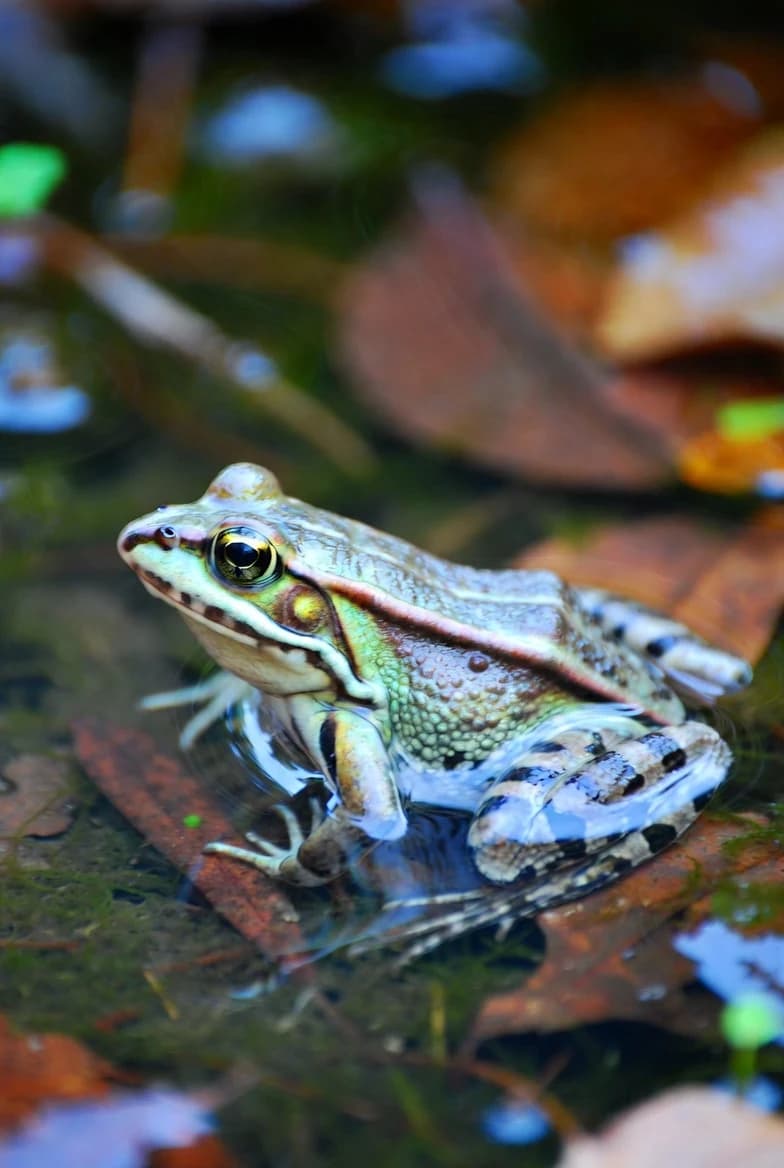
Give frogs safe pond edges, damp routes and quiet shelter so the whole garden becomes usable habitat.
Frogs breed in water but need connected shelter on land. A shallow edge, damp planting and undisturbed refuges let them move safely through changing seasons.
Water for breeding and cooling. Land for feeding, shelter and winter refuge.
Shallow margins and an exit that works at every water level.
Cover that joins the pond to shrubs, borders and quiet corners.
Logs, stones and leaves left long enough to become habitat.
Most of the materials can come from normal garden work. The value comes from how they connect and how little they are disturbed afterwards.
 01
01Frogs spend much of their lives away from open water, so begin with the route between the pond, shelter and surrounding planting. A partly shaded strip beneath shrubs or along the back of a border can stay cooler and damper than exposed lawn.
Keep the route as continuous as possible. Dense low planting, leaf litter and small gaps beneath timber let amphibians cross the garden without being left in the open for long.
 02
02Use untreated timber, bark, branches, flat stones and fallen leaves to create several kinds of shelter rather than one sealed box. Different gaps hold different temperatures and moisture levels.
Place the heaviest pieces directly on the soil and keep the structure low and stable. Avoid sharp wire, treated wood or anything that could collapse when wet.
 03
03Stack thicker logs or stones to form a low chamber with more than one opening. Add smaller branches and leaves above it, leaving a sheltered hollow beneath rather than packing every gap tightly.
Position the refuge near cover but not directly in a place that regularly floods. Once it is settled, leave it alone: repeated lifting and checking can disturb the very animals it is meant to protect.
 04
04A wildlife pond should include a gently shelving margin, a gravel beach or stable stones that continue from below the waterline to dry ground. Steep-sided containers need a secure ramp that cannot slip away as the water level changes.
Keep at least one route clear of dense growth so small animals can leave the water easily. Do not move frogspawn, frogs or pond water from another site; let wildlife find the habitat naturally.
 05
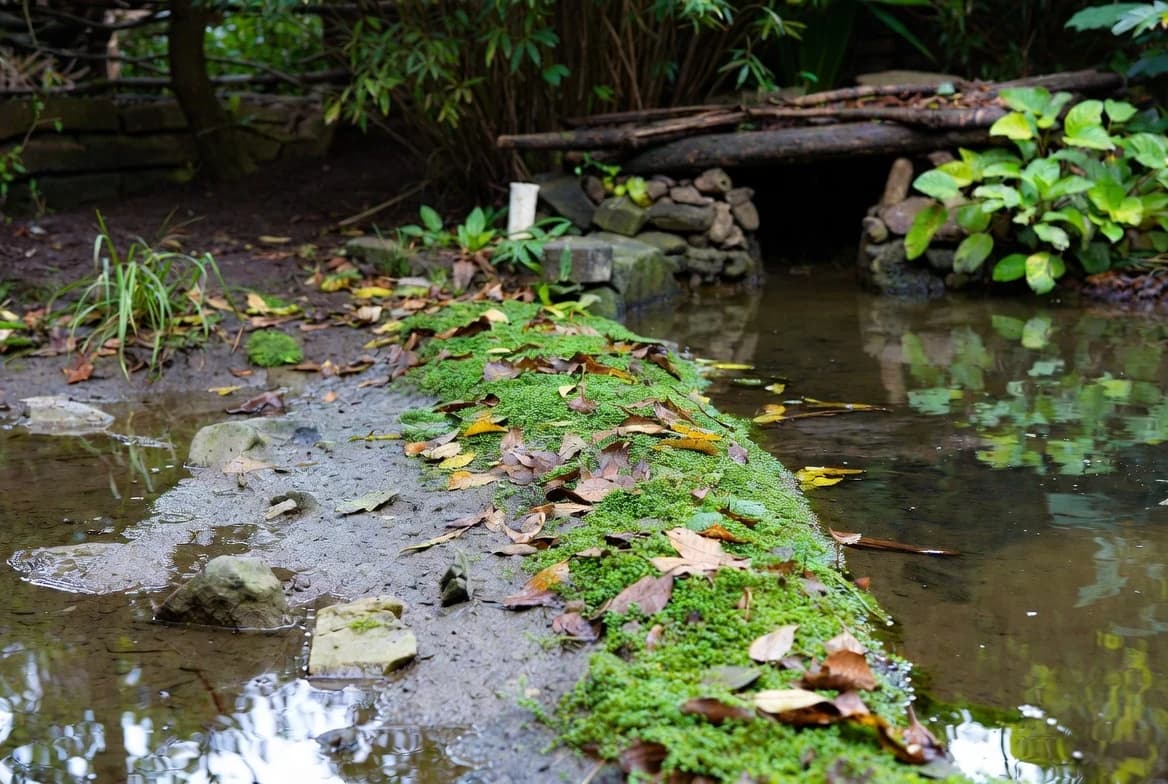
05Plant around part of the pond edge and continue that shelter towards logs, stones or a shaded border. Grasses, low ground cover and loose leaves create a humid transition instead of an abrupt jump from water to bare lawn.
Leave some open water and a visible exit, but allow other edges to soften naturally. The aim is variety: shallow water, damp soil, dense cover and dry refuges all within a short journey.
 06
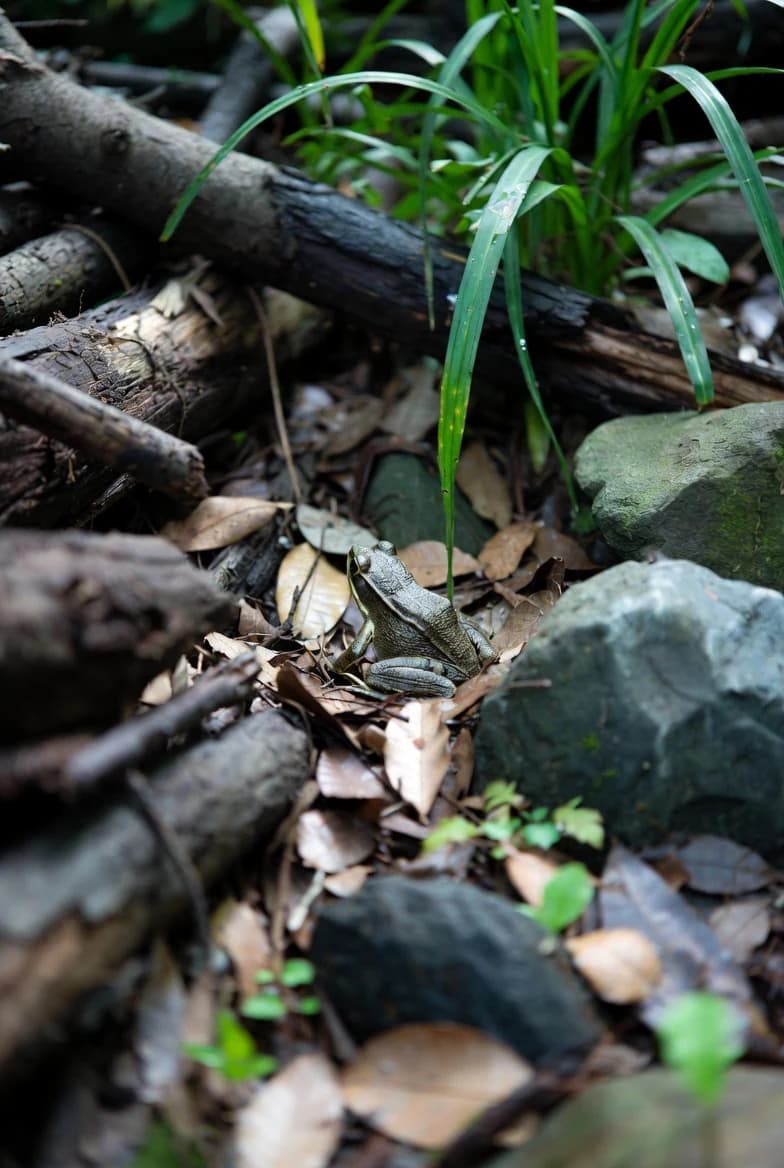
06Fallen leaves, mossy stones and loose timber create feeding and hiding places beyond the breeding season. Leave selected areas undisturbed through autumn and winter rather than clearing every corner back to bare soil.
Before mowing long grass, moving a log pile, turning compost or lighting a bonfire, check carefully for sheltering wildlife. Work slowly and from one side so animals have an escape route.
 Water → cover → refuge
A pond, mini pond or shallow dish with a dependable exit.
Low planting and leaf litter that continue beyond the waterline.
A quiet log, stone or compost area that stays largely undisturbed.
Steep pond walls and water containers need a stable ramp or shallow edge.
Do not move adults, spawn, plants or pond water between sites.
Use targeted, physical controls instead of treating the whole food web.
Inspect long grass, logs, compost and bonfire material before moving it.
The best amphibian habitat often looks like a corner the garden has been allowed to keep for itself.
No. A small pond or watertight container can provide useful water when it has a dependable escape route, suitable planting and nearby cover. A larger pond supports more varied habitat, but safe edges matter more than scale alone.
No. Let frogs, toads and newts arrive naturally. Moving animals, spawn, plants or pond water can spread disease and invasive species between sites.
They use damp planting, leaf litter, log piles, stone gaps, compost areas and other sheltered ground habitat. That is why the land around the pond is just as important as the water itself.
A wildlife garden works best without broad pesticide use. Frogs are part of the garden food web, so focus on barriers, hand removal and healthy planting rather than treating the whole area.
Usually no. Once established, leave log, leaf and stone refuges undisturbed unless there is a genuine safety problem. Add leaves from above rather than dismantling the structure.
These organisations provide current UK advice on ponds, amphibians and wildlife-friendly outdoor spaces.
Mini Wild Garden turns wildlife science and trusted UK conservation guidance into practical changes that work in ordinary gardens, balconies and small outdoor spaces.
Read the Mini Wild Garden approach →