Nectar
Open flowers repeated in generous groups through the season.

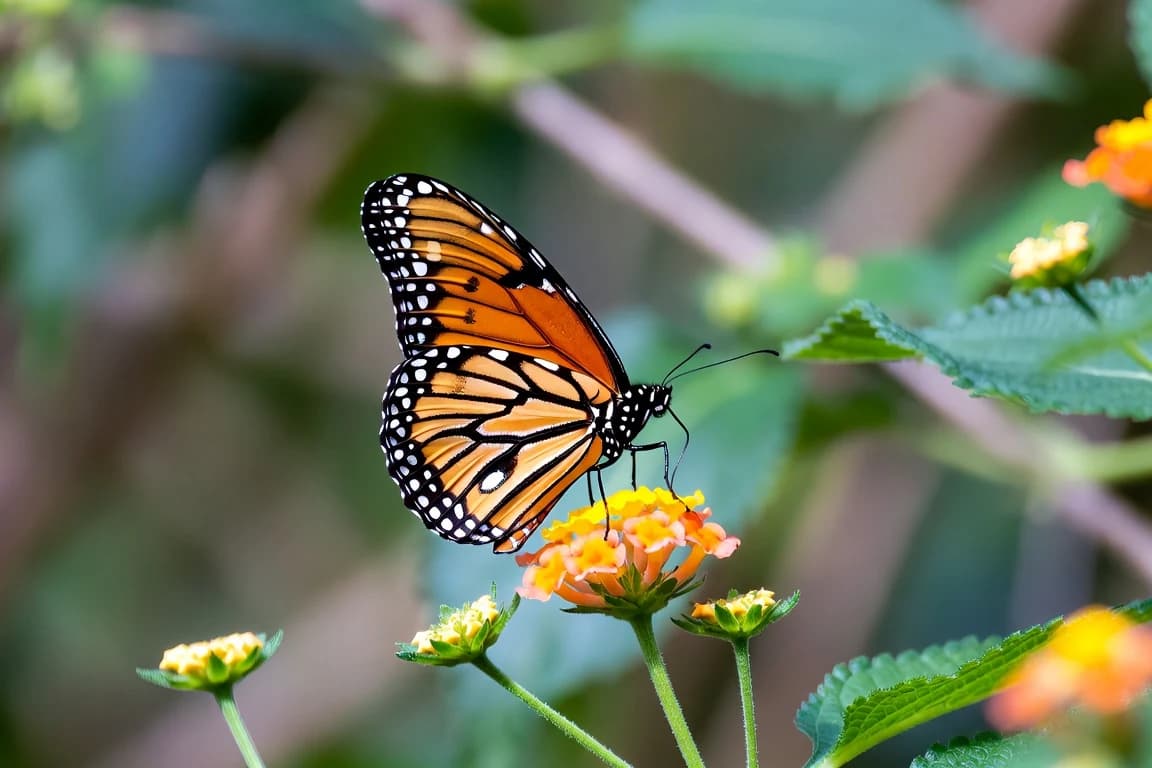
Create a long season of nectar, caterpillar food and warm shelter in a border, pot or tiny sunny corner.
A butterfly-friendly garden supports the entire life cycle: sunny flowers for adults, the right leaves for caterpillars and undisturbed cover when the season turns cold.
Nectar to feed. Leaves to breed. Shelter to survive the quieter months.
Open flowers repeated in generous groups through the season.
Food plants allowed to be eaten rather than treated as damage.
Sun, wind protection and stems left standing when flowering ends.
A beautiful border can also be a sequence of feeding opportunities, with something opening as another plant begins to fade.
 01
01Butterflies need warmth to become active and feed efficiently. Choose a border, patio edge or container group that receives several hours of sun and is protected from the strongest winds.
A small space can work well when it is easy to see and reach. Start with one intentional patch rather than scattering isolated flowers across the whole garden.
 02
02Different butterflies fly at different times, so the most useful garden has flowers opening in succession. Combine early plants such as primrose and wallflower with summer lavender, marjoram and scabious, then extend the season with sedum, asters and flowering ivy.
Choose mostly single, open flowers with accessible centres. Repeating the same plants in generous groups helps butterflies locate a reliable feeding patch quickly.
 03
03Place several plants of the same kind together instead of creating a single specimen collection. Repeated colour and scent make the feeding area more visible and reduce the distance butterflies travel between flowers.
Use taller plants behind and lower flowers at the front, leaving a few sunny gaps for basking. Water new plants carefully while they establish, especially in containers and dry borders.
 04
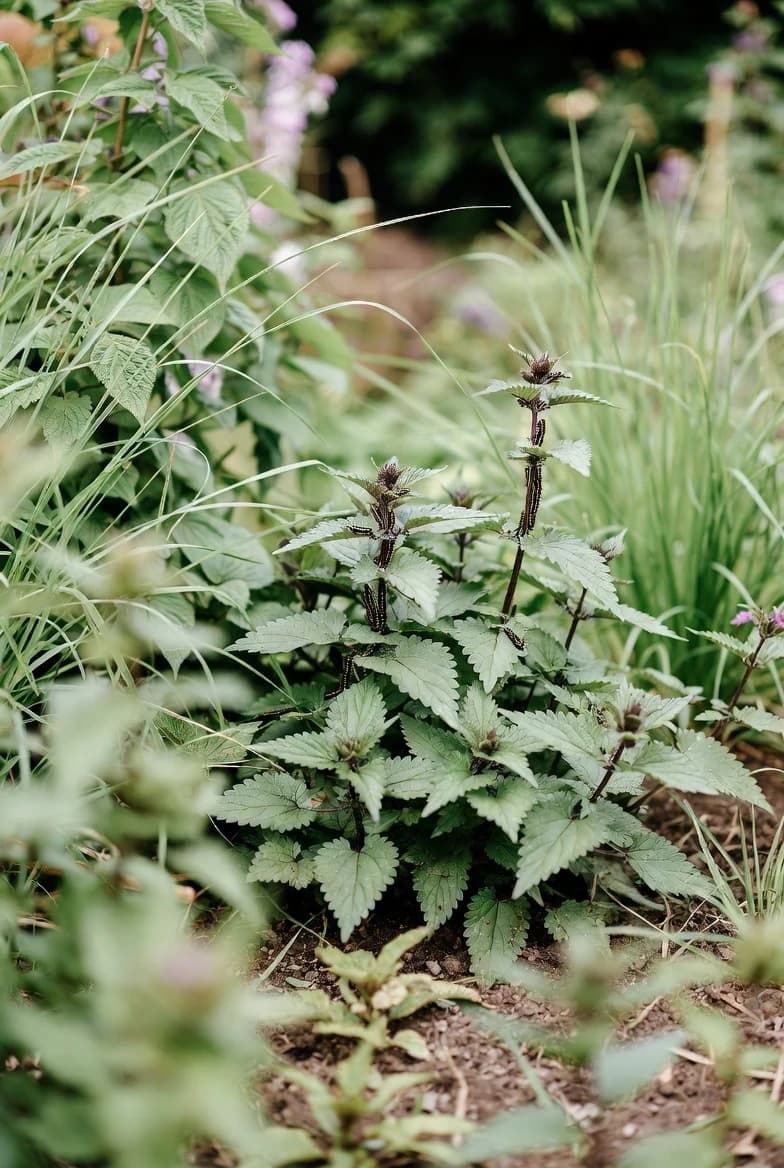
04Adult butterflies need nectar, but caterpillars need the right leaves. A managed nettle patch can help species including red admirals, commas, peacocks and small tortoiseshells, while grasses, holly, ivy and other plants support different butterflies and moths.
Keep caterpillar plants in a sunny or partly sunny position and allow some chewed leaves. The damage is evidence that the habitat is working, not a reason to remove the plant.
 05
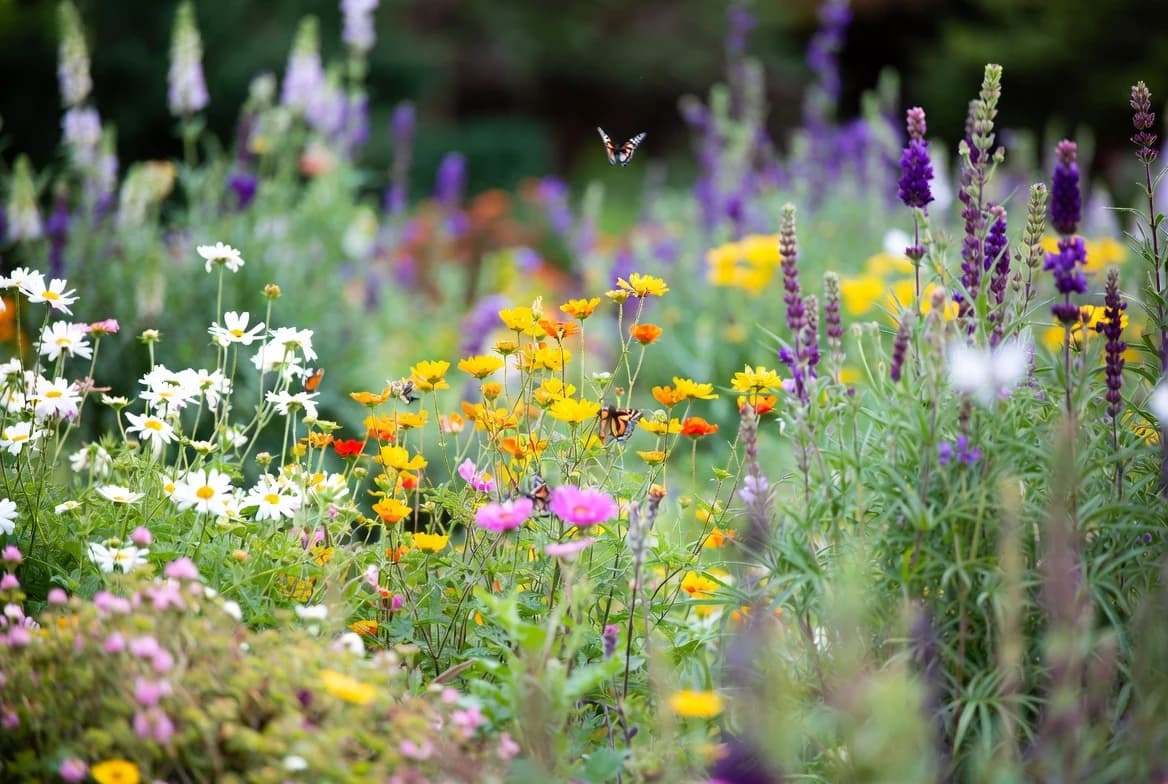
05Do not cut every stem or clear every leaf at once. Hollow stems, seed heads, ivy and dense evergreen growth can give insects places to rest or overwinter, while late flowers continue to provide food.
Tidy in stages rather than stripping the whole border. Leave one section standing until spring, and avoid pesticides that can affect caterpillars and the insects sharing the same plants.
Choose plants that suit your own soil and light.Primrose, wallflower, aubretia, honesty and dandelion help the first active butterflies.
Lavender, marjoram, thyme, scabious, verbena and buddleia keep sunny borders busy.
Sedum, asters, verbena, ivy and late herbs extend feeding as other flowers disappear.
Nectar attracts adults, but caterpillar food plants allow butterflies and moths to breed. Keep a managed patch of nettles, grasses, ivy or other suitable host plants and accept that some leaves will look chewed.
When flowers overlap through the year and caterpillar plants remain nearby, a decorative border starts to support an entire life cycle.
The strongest garden offers nectar across a long season. Lavender, marjoram, thyme, scabious, buddleia, sedum, asters, verbena and flowering ivy are useful examples, but choose plants that suit your soil, light and available space.
No. A sunny border, repeated containers or even one well-planted window box can provide a valuable feeding stop when flowers are nectar-rich and available across several months.
Nettles are caterpillar food plants for several familiar butterflies. A small managed patch in sun or light shade can support breeding in a way that nectar flowers alone cannot.
Planting, shelter and undisturbed stems are usually more important than a decorative box. Focus first on nectar, caterpillar food plants, warmth and places to overwinter naturally.
Group pots of long-flowering plants in the sun, add a shallow drinking dish with stones, allow one compact caterpillar food plant where practical and leave some stems standing through winter.
Use current UK guidance to extend flowering, support local species and understand which caterpillar food plants suit your garden.
Mini Wild Garden turns wildlife science and trusted UK conservation guidance into practical changes that work in ordinary gardens, balconies and small outdoor spaces.
Read the Mini Wild Garden approach →