Light
A mixture of sun and shade supports plants without turning a small pond into an all-day heat trap.
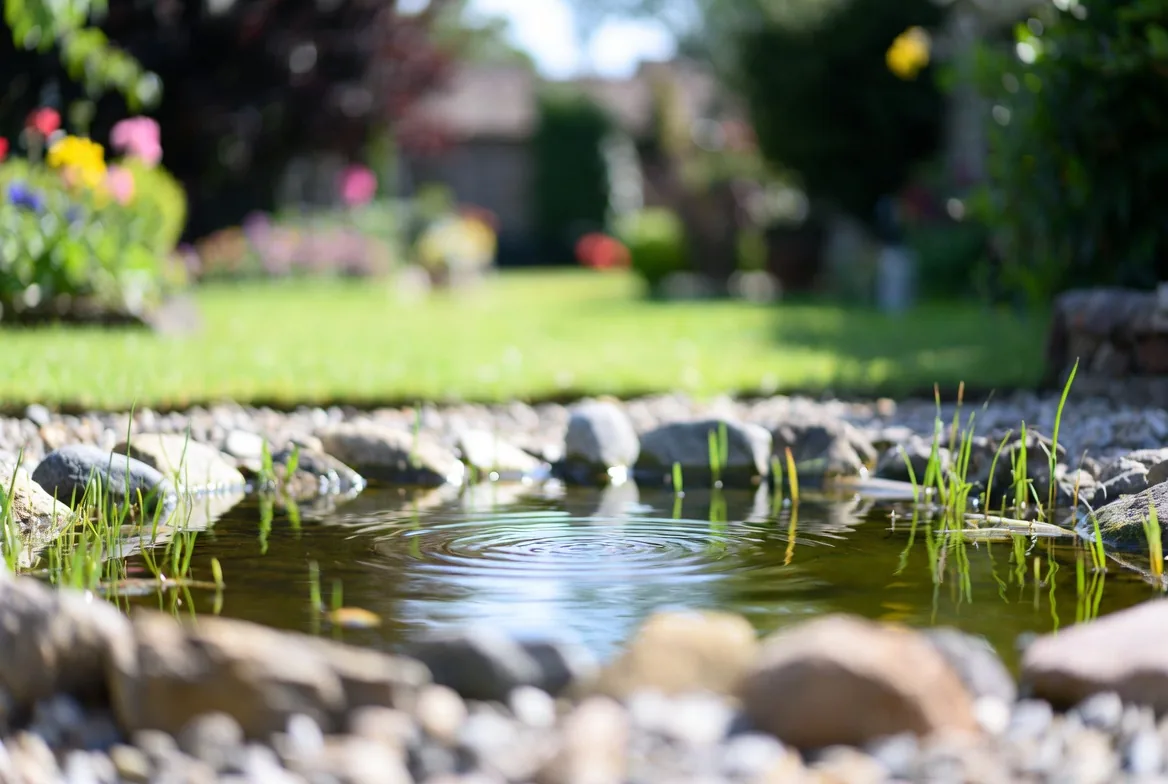
Create shallow water, safe exits and a living edge that turns an ordinary patch of garden into a meeting place for wildlife.
Water gives wildlife somewhere to drink, bathe, hunt, shelter and breed. The pond does not need to look pristine. It needs usable edges, varied structure and enough time to become part of the garden.
This guide shows a larger pond build using either a preformed shell or flexible liner. A watertight container can use the same principles when digging is not possible.
 Before
 After
AfterThe most important part of a wildlife pond is often not the deepest water. It is the meeting point between water and land.
A mixture of sun and shade supports plants without turning a small pond into an all-day heat trap.
Build a shallow margin or stable ramp that reaches beyond the waterline from the start.
Connect the pond to low planting, logs, stones and damp shelter rather than isolating it in bare lawn.
Check for underground services before digging. Site every pond with children, visitors and pets in mind, use barriers where appropriate, and never rely on shallow water alone as a safety measure.
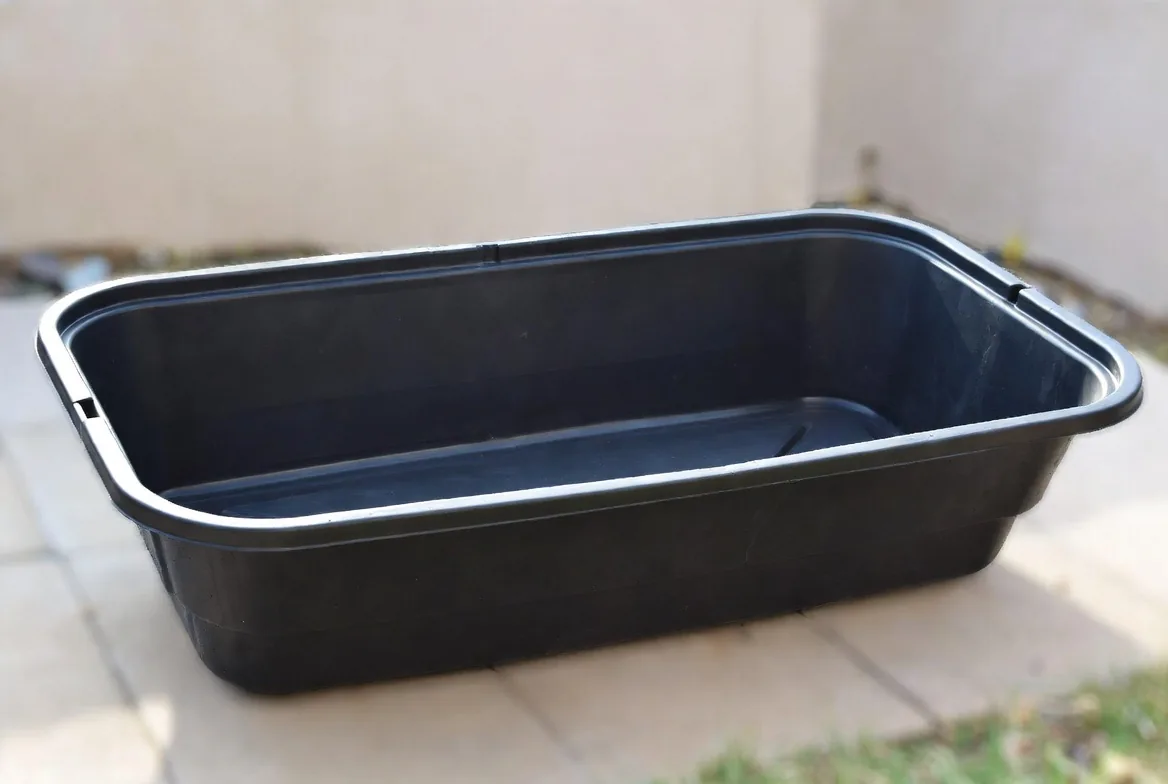
Add internal and external access ramps, compact plants and nearby cover. The same wildlife-first principles still apply.
Pause at each stage and check stability, level and access. It is easier to correct the structure before the water goes in.
01Look for a place with a mixture of sun and shade, rather than a corner that bakes all day. A little light helps pond plants, while nearby planting gives amphibians and insects cover when they leave the water.
Avoid digging beneath large mature trees, where roots can be damaged and falling leaves may overwhelm a small pond. Keep the finished water somewhere you can supervise if children or pets use the garden.
 02
02A preformed shell is straightforward to position and gives a dependable watertight shape. A flexible liner allows a more natural outline and makes it easier to design broad, shallow margins.
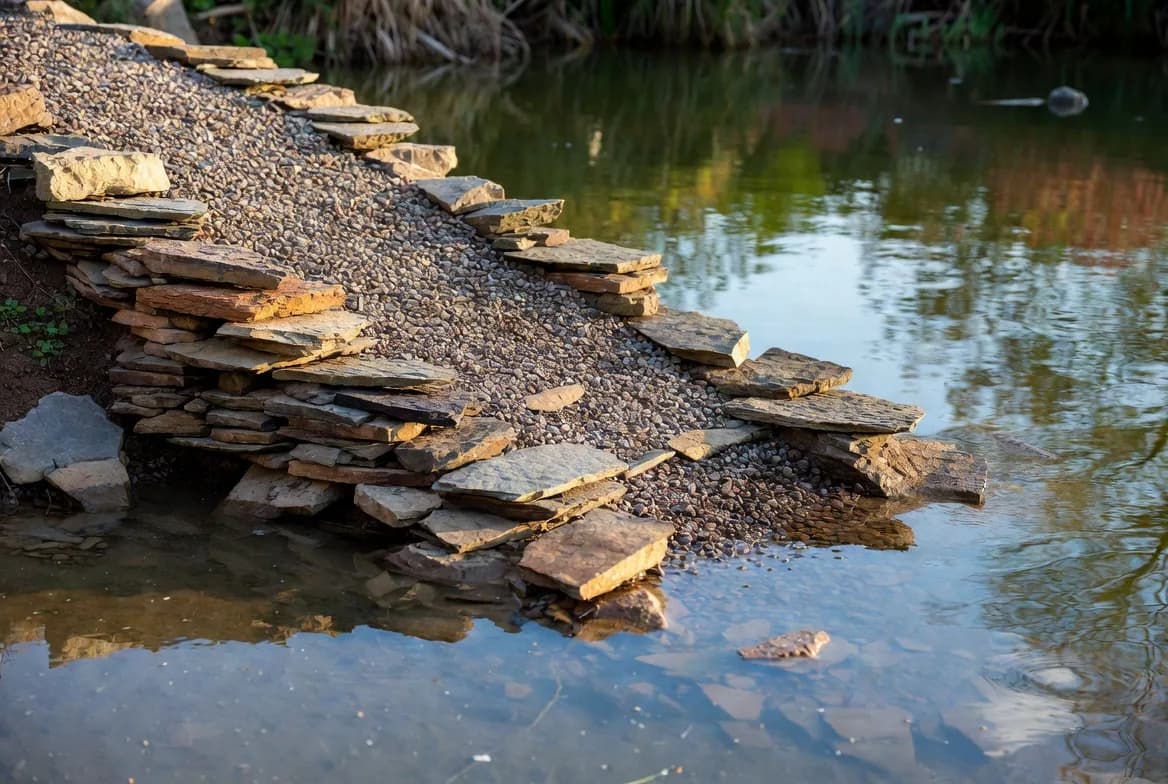
Whichever method you choose, plan an obvious escape route before the pond fills. Preformed shells often have steep sides, so add a secure internal ramp or a bank of stones that reaches above the waterline.
 03
03Place the shell upside down and mark around it, or use a hose or string to trace a liner pond. Check for cables, pipes and other underground services before breaking ground.
Dig in stages, regularly checking the rim with a spirit level. A level pond looks better, holds more water and prevents one edge of the liner or shell becoming exposed when it fills.
 04
04Wildlife benefits from varied water depths. Use stable shelves for marginal plants, a shallow pebble beach for drinking insects and a deeper central area where the pond can remain cooler.
If you use bricks or stones inside a liner pond, make sure there are no sharp edges pressing directly against the liner. Cover rough ground with underlay or a soft bed of sand before the liner goes in.
 05
05Rinse gravel until the water runs mostly clear, then use it sparingly across shelves and the shallow edge. Rounded stone creates landing places and small crevices without introducing fertiliser-rich garden soil.
Build the escape slope so it cannot slip or collapse. It should run from below the water to dry ground beyond the rim, giving hedgehogs and other animals a dependable way out if they fall in.
 06
06Collected rainwater is the best first choice because mains water can contain nutrients that encourage algae. Fill gradually so you can adjust shelves, smooth the liner and check that the edge remains level.
If rainwater is not available, do not let the project stall indefinitely. Use the best practical option, then allow the pond to settle naturally and use rainwater for future top-ups whenever possible.
 07
07Choose responsibly sourced plants suited to the size and depth of the pond. A mixture of submerged, floating and marginal growth creates cover, perches and underwater structure.
Do not take plants from wild ponds. Avoid invasive non-native species and keep vigorous plants in baskets where appropriate so they can be managed without repeatedly disturbing the whole pond.
 08
08Finish at least one side with a broad shallow margin, gravel beach or securely placed stones. Add low planting, logs or damp cover nearby so frogs, newts and insects can move between the pond and the wider garden.
Do not add fish, frogspawn or buckets of water from another pond. Wildlife can arrive under its own power, while moving water or animals between ponds can spread disease and unwanted species.
A newly filled pond may look sparse, cloudy or green before plants establish. Resist the urge to keep resetting it. Observe, make small adjustments and allow natural colonisation to unfold.
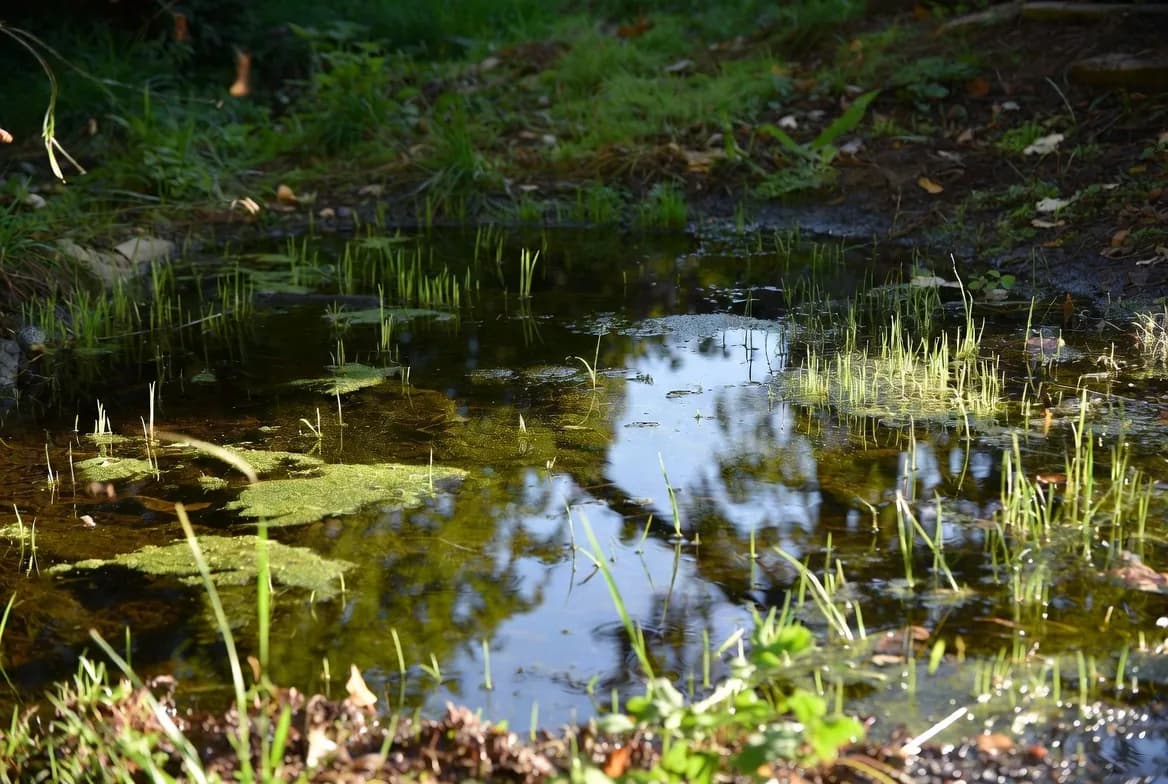
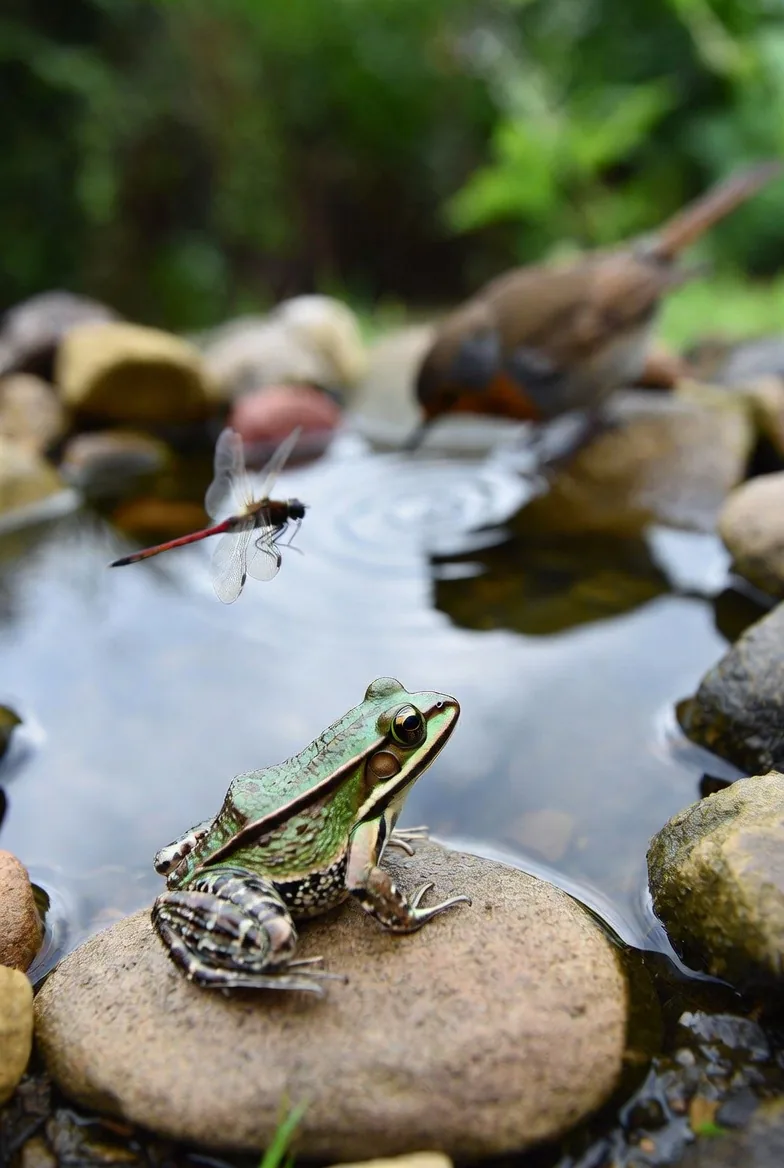
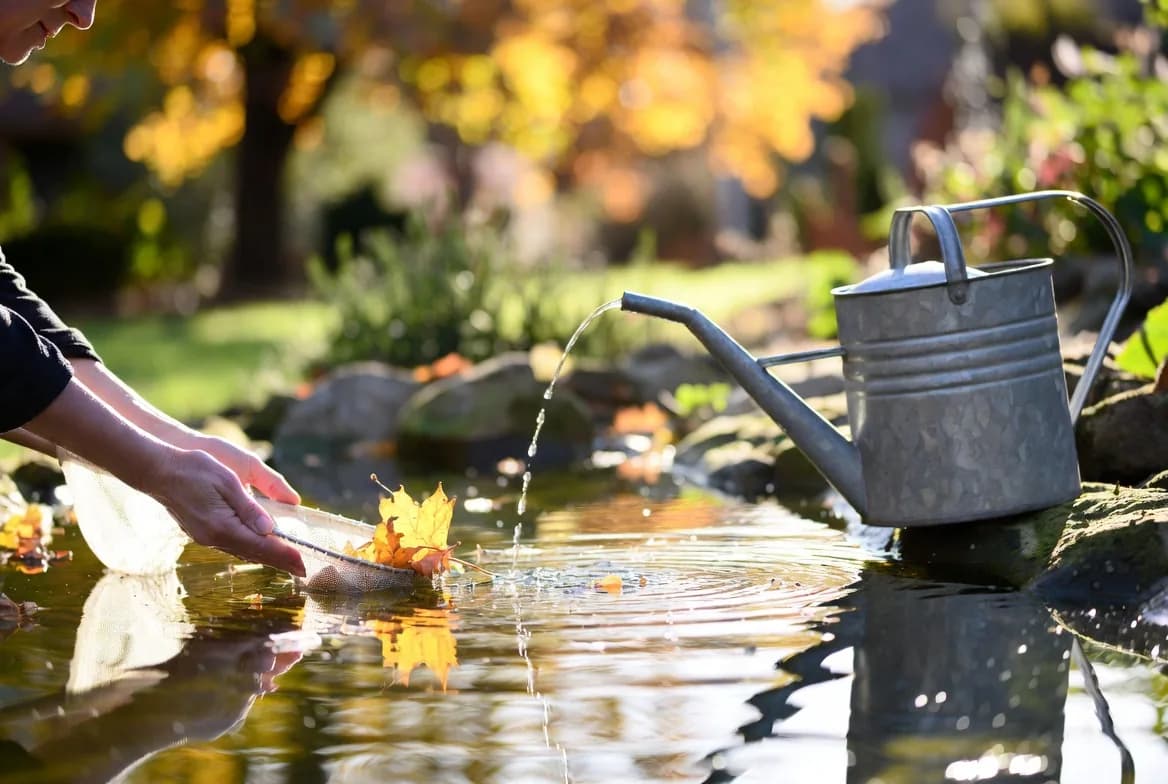
Check access points, divide only overgrown plants and watch for emerging wildlife.
Allow natural fluctuations. Top up with rainwater when genuinely needed.
Remove excessive fallen leaves and leave cleared material beside the pond briefly so small creatures can return.
Leave hollow stems and marginal growth standing where safe, then cut back selectively near the end of winter.
Fish eat eggs, larvae and other small pond life. Keep a wildlife pond and ornamental fish pond separate.
Buy responsibly sourced plants rather than removing them from natural ponds and wetlands.
Do not move frogspawn, animals or buckets of pond water between sites because disease and invasive species can travel too.
Ordinary compost and fertile soil release nutrients into the water. Use aquatic compost only where the chosen plant requires it.
A deep container or shell without a dependable ramp can trap mammals, amphibians and insects.
Repeated emptying destroys the developing habitat. Intervene lightly and only when a genuine problem needs solving.
There is no minimum size that suddenly makes water useful. A container can provide drinking and bathing water, while a larger pond can support a wider range of plants and breeding wildlife. Safe access, varied depth and nearby cover matter more than creating a grand feature.
A wildlife pond does not normally need a pump. Still water supports many pond species, and a pump can disturb tiny animals. A decorative moving-water feature can be kept separate if that is part of your garden design.
Rainwater is preferable, especially for filling and topping up a small pond, because tap water can add nutrients that encourage algae. When rainwater is unavailable, use the most practical safe option rather than leaving the pond empty, then switch to collected rainwater for later top-ups.
Flying insects may investigate very quickly, while amphibians might take much longer and depend on nearby populations and connected habitat. Avoid moving animals into the pond; part of the pleasure is watching the community establish naturally.
No. New ponds often pass through an algae-rich phase while plants establish. Avoid reflexively emptying and scrubbing the pond. Reduce nutrient inputs, give plants time and remove only excessive blanket weed by hand when necessary.
This guide has been written as practical garden information and checked against current advice from established UK conservation and horticultural organisations.
Last reviewed: July 2026Mini Wild Garden turns wildlife science and trusted UK conservation guidance into practical changes that work in ordinary gardens, balconies and small outdoor spaces.
Read the Mini Wild Garden approach →