
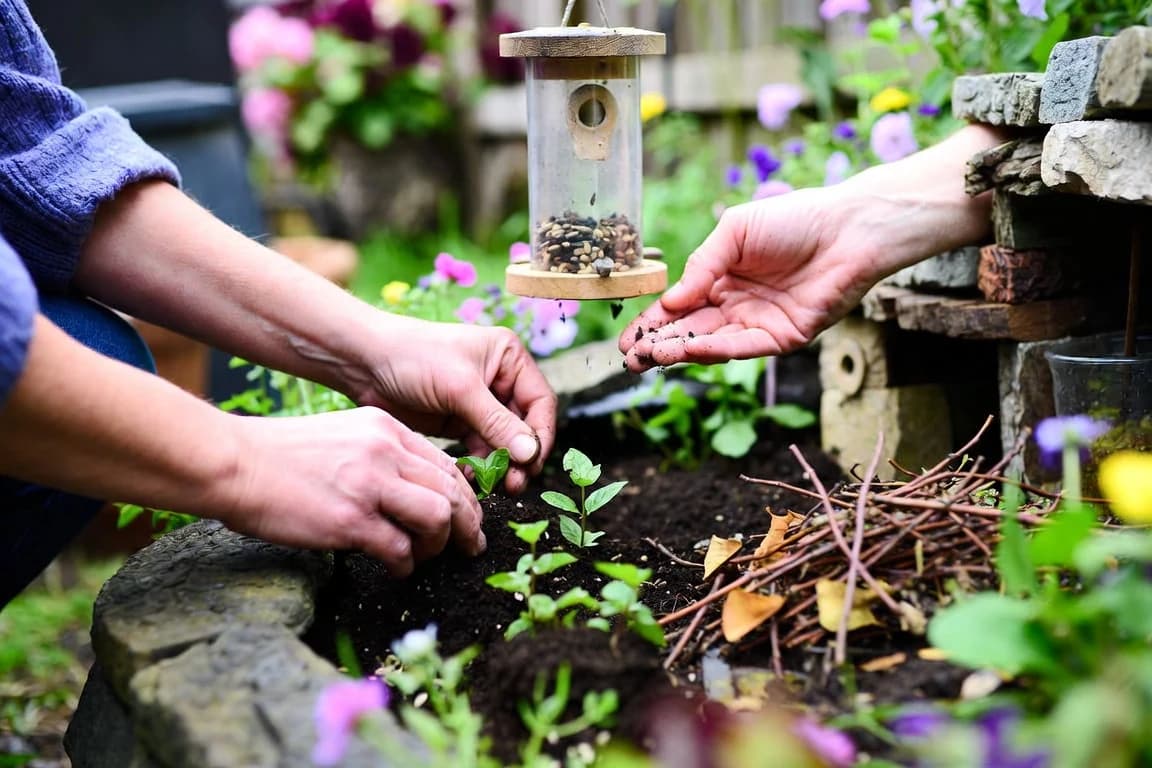
Hands planting seedlings in a wildlife-friendly garden bed
Garden care

Move towards chemical-free gardening

Use prevention, healthy soil and natural predators to manage common garden problems.

Why it matters

A wildlife garden contains creatures that gardeners sometimes call pests. The aim is not to remove every problem, but to protect important plants while allowing a balanced food web to develop.

Step by step

Make it happen.

01

Build healthier plants

Match plants to their conditions, improve soil structure and water well during establishment. Strong plants cope better with minor damage.

02

Use physical barriers

Fine mesh, collars, hand removal and protected propagation can prevent damage without introducing persistent chemicals.

03

Welcome predators

Ponds, dense planting, log piles and bird-friendly habitats encourage animals that naturally feed on many garden pests.

04

Accept a little damage

Chewed leaves are often evidence that your garden is supporting life. Intervene only where damage is likely to cause a genuine problem.

Keep it wild. Keep it safe.

Let wildlife arrive in its own time.

Use responsibly sourced plants and materials, avoid moving animals from the wild, and always build in safe access and escape routes. The best habitat is one that can settle, change and become part of the wider garden.

Written and reviewed by

Natasha Card

BSc Environmental Science

Mini Wild Garden turns wildlife science and trusted UK conservation guidance into practical changes that work in ordinary gardens, balconies and small outdoor spaces.

Read the Mini Wild Garden approach
Was this guide helpful?