
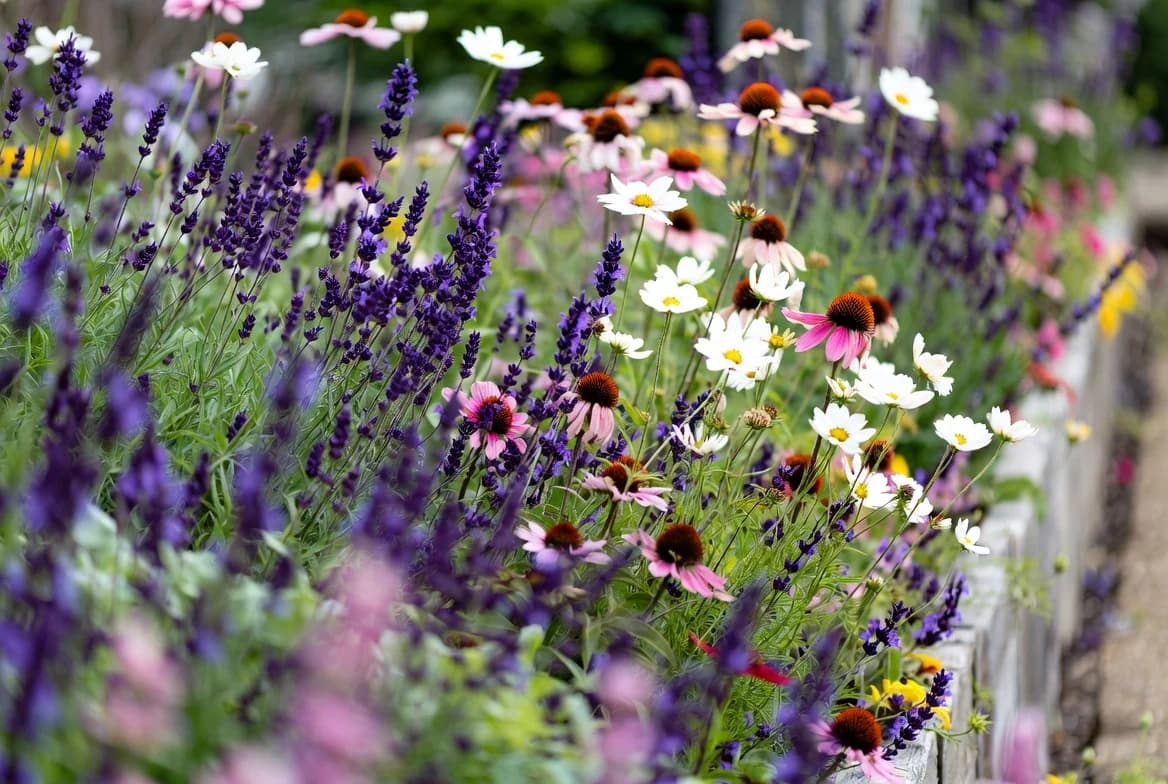
A flower-filled border of lavender, cosmos and echinacea for bees and pollinators
Pollinators

Best flowers for bees and pollinators

Choose flowers that keep nectar and pollen available from spring into autumn, whether you have a border, a few pots or a window box.

Why it matters

The most useful bee planting offers a long season of open flowers rather than a single short burst. Repeating a few reliable plants across borders and containers helps pollinators feed more efficiently and makes even a small space feel generous.

Step by step

Make it happen.

01

Plan a long flowering season

Combine early, mid-season and late flowers so pollinators can find food for as much of the year as possible. Crocus, primrose and pulmonaria help in spring, while lavender, cosmos, echinacea, sedum and flowering herbs extend the season.

02

Choose open, nectar-rich flowers

Single flowers are usually easier for bees and hoverflies to access than tightly doubled blooms. Favour plants with visible centres and avoid choosing purely for show if the pollen is hidden or difficult to reach.

03

Plant in drifts and repeat in pots

Clumps of the same flower are easier for pollinators to spot and work quickly. A border can use generous drifts, while balconies and patios can repeat the same bee-friendly plants across several containers for a stronger effect.

04

Add water and garden gently

A shallow dish with stones gives insects a safe place to drink. Avoid pesticides, let herbs flower and leave a little bare ground where practical because many solitary bees prefer simple nesting opportunities close to food.

Keep it wild. Keep it safe.

Let wildlife arrive in its own time.

Use responsibly sourced plants and materials, avoid moving animals from the wild, and always build in safe access and escape routes. The best habitat is one that can settle, change and become part of the wider garden.

Written and reviewed by

Natasha Card

BSc Environmental Science

Mini Wild Garden turns wildlife science and trusted UK conservation guidance into practical changes that work in ordinary gardens, balconies and small outdoor spaces.

Read the Mini Wild Garden approach
Was this guide helpful?