
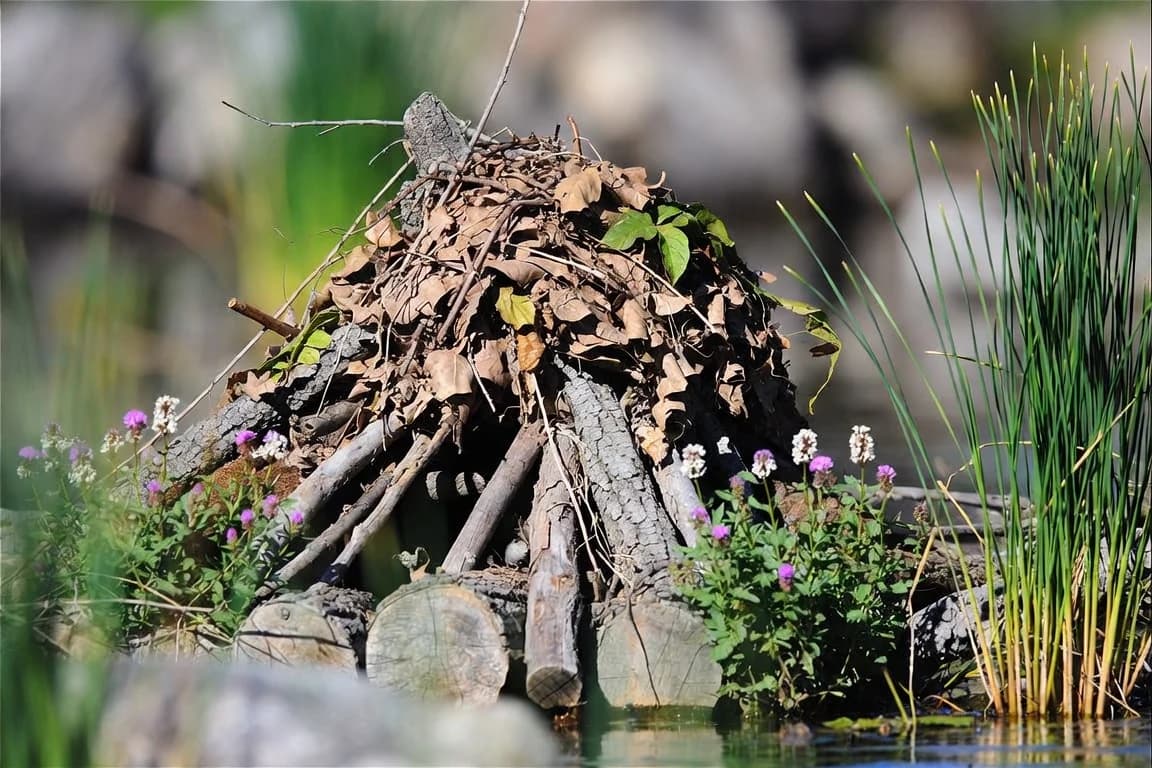
A wildlife log and leaf pile beside a pond
Shelter

Build a wildlife log pile

Create a low-maintenance hiding, feeding and overwintering space from natural materials.

Why it matters

Dead wood supports fungi, beetles and many other small organisms. It also creates damp, sheltered spaces for amphibians and invertebrates.

Step by step

Make it happen.

01

Pick a quiet corner

Choose somewhere partly shaded and close to other planting. Direct contact with the soil helps the natural decay process begin.

02

Use varied material

Mix thicker logs, smaller branches, bark and a little leaf litter. Different sizes create a wider range of gaps and moisture levels.

03

Keep it stable

Stack low and securely so the pile cannot roll or collapse onto children, pets or paths.

04

Leave it alone

Decay is the purpose. Avoid repeatedly moving or tidying the pile once wildlife may have started using it.

Keep it wild. Keep it safe.

Let wildlife arrive in its own time.

Use responsibly sourced plants and materials, avoid moving animals from the wild, and always build in safe access and escape routes. The best habitat is one that can settle, change and become part of the wider garden.

Written and reviewed by

Natasha Card

BSc Environmental Science

Mini Wild Garden turns wildlife science and trusted UK conservation guidance into practical changes that work in ordinary gardens, balconies and small outdoor spaces.

Read the Mini Wild Garden approach
Was this guide helpful?