
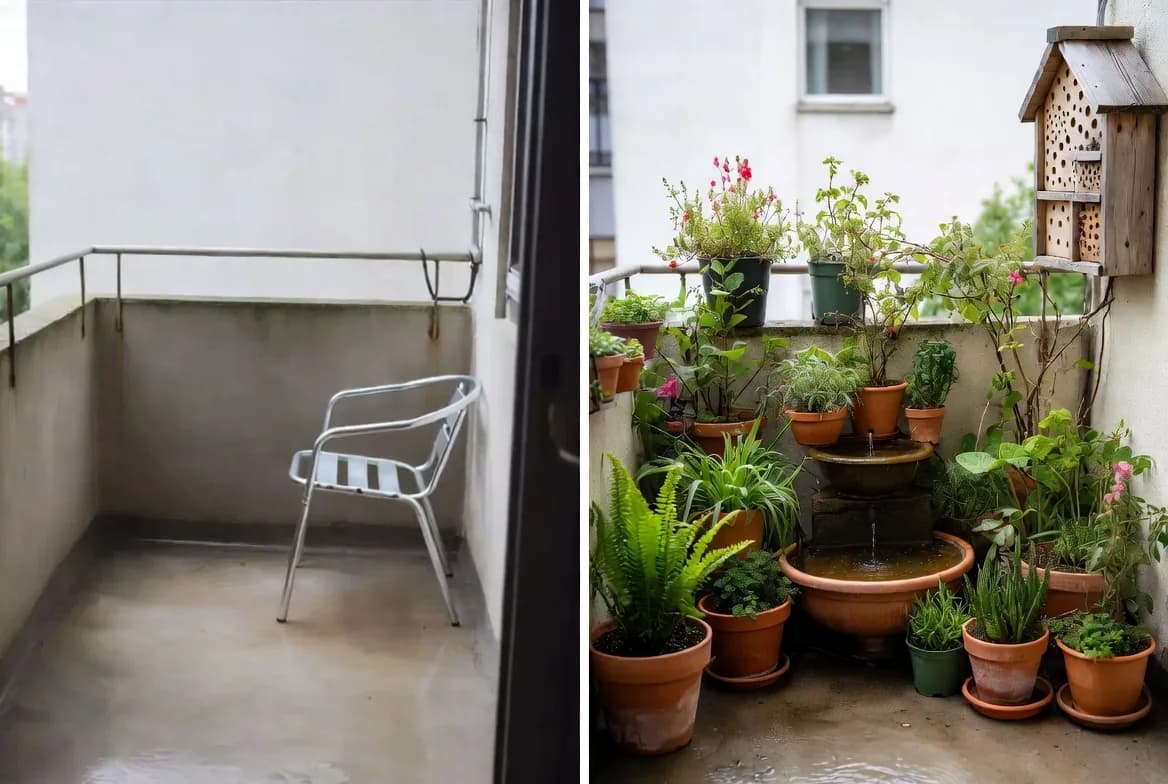
A bare balcony shown beside its transformation into a planted wildlife space
Small spaces

Transform a balcony for wildlife

Turn a bare balcony into a layered mini habitat with flowers, shelter, safe water and useful vertical planting.

Why it matters

A balcony cannot replace a full garden, but it can become a valuable stepping stone through a built-up area. The strongest designs combine nectar-rich planting, shallow water, shelter and a few different heights without making the space difficult to use or maintain.

Step by step

Make it happen.

01

Start with the practical limits

Check how much sun and wind the balcony receives, where water can drain and whether your tenancy or building has rules about fixings, screening or heavy containers. Keep doors, drains and escape routes clear, and use stable pots that cannot fall in strong weather.
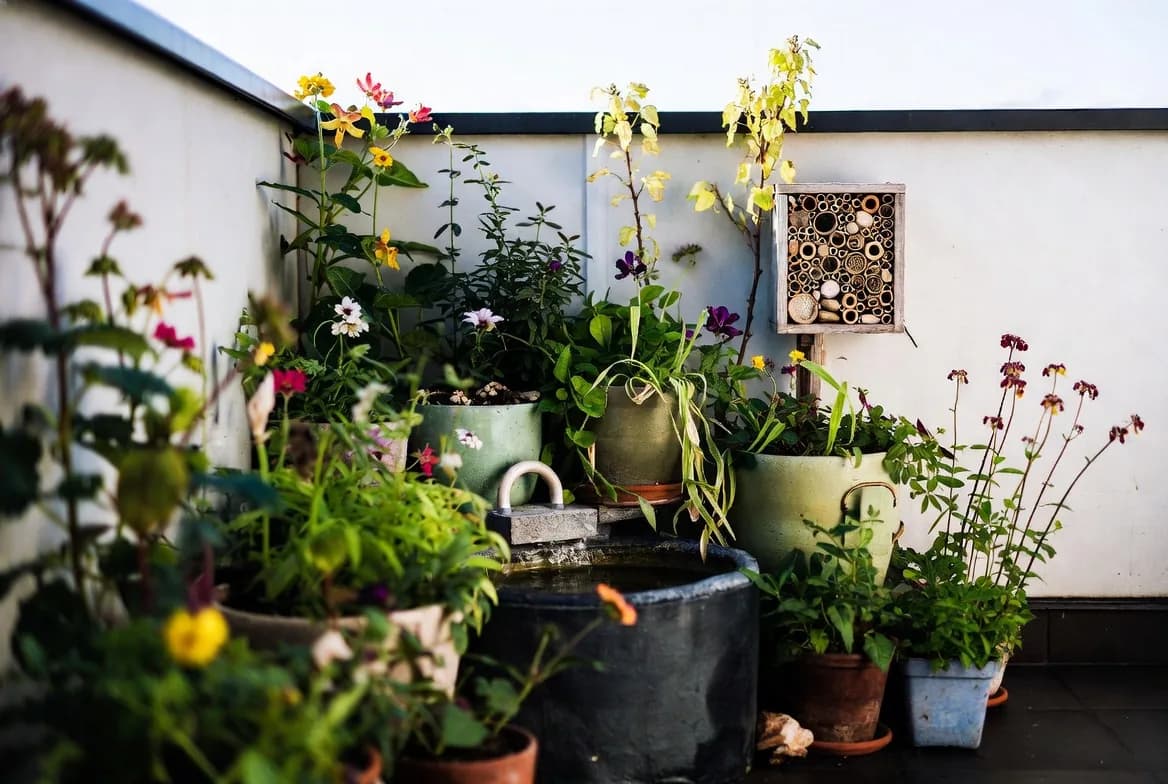
A compact balcony transformed with wildlife-friendly pots, flowers and a water feature
02

Build layers with containers

Group larger pots at the back, flowering herbs and perennials through the middle, and trailing or low plants around the edges. Repeating a few reliable species creates a stronger feeding patch than scattering many single plants, while climbers and hanging baskets add height without using more floor space.
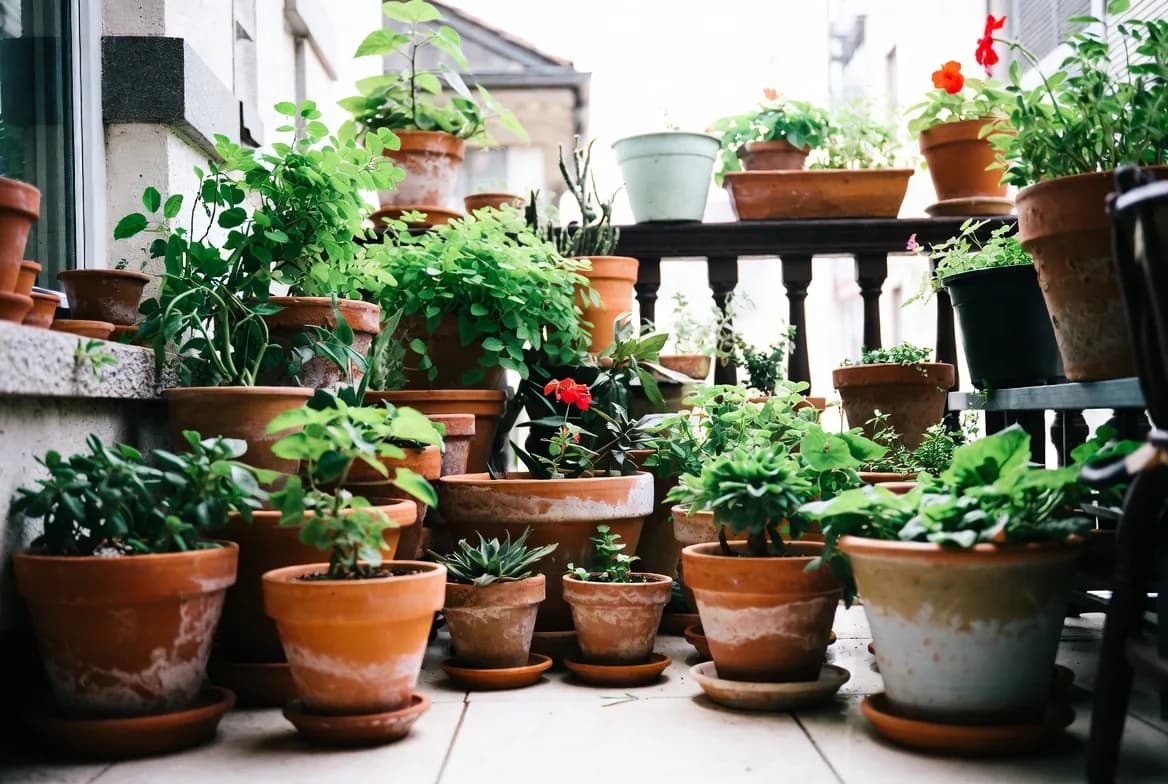
A dense collection of planted containers creating several layers of balcony habitat
03

Add shallow water and shelter

Use a shallow dish or small container pond with stones, stable planting and an easy way out. A compact insect shelter can add extra structure, but natural materials, hollow stems and dense pots are useful too. Keep water clean and avoid placing a deep open container where children or pets could reach it.
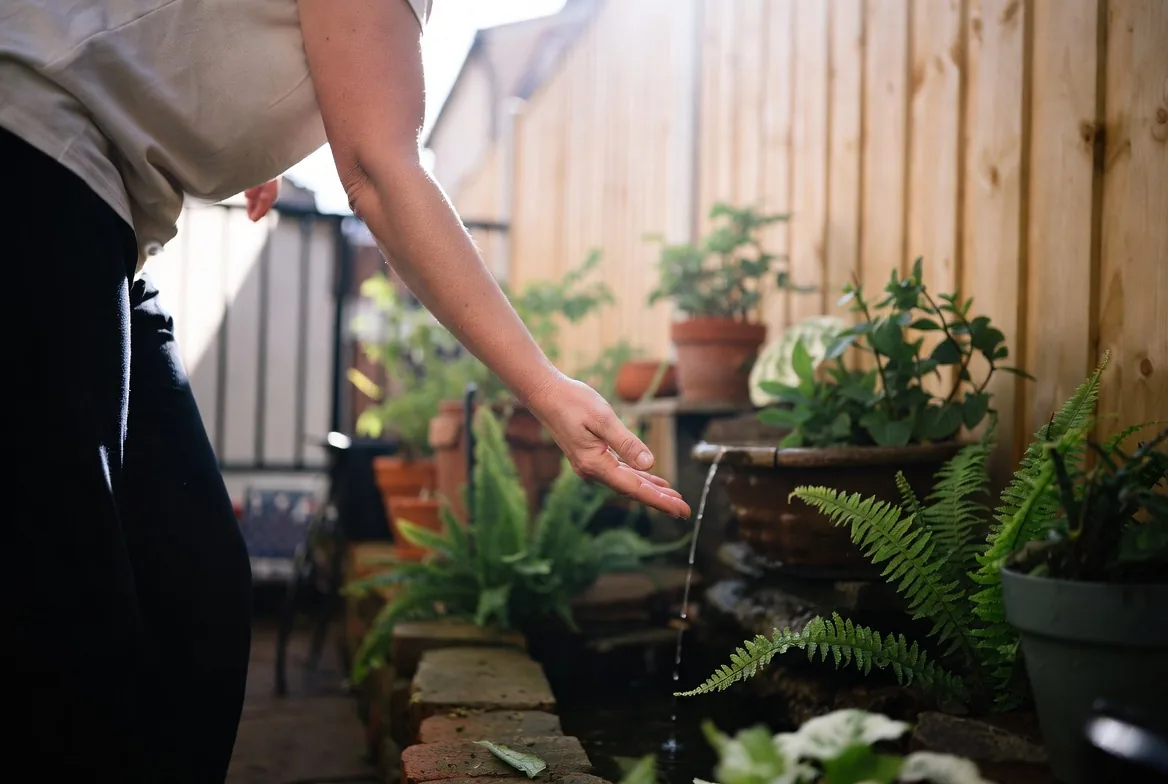
A small balcony water feature surrounded by pots and ferns
04

Make the finished space easy to sustain

Mulch pots, collect rainwater where practical and choose plants that suit the real conditions. Leave a few stems and seed heads through winter, replace failed plants gradually and keep enough open space to sit, water and inspect everything safely.
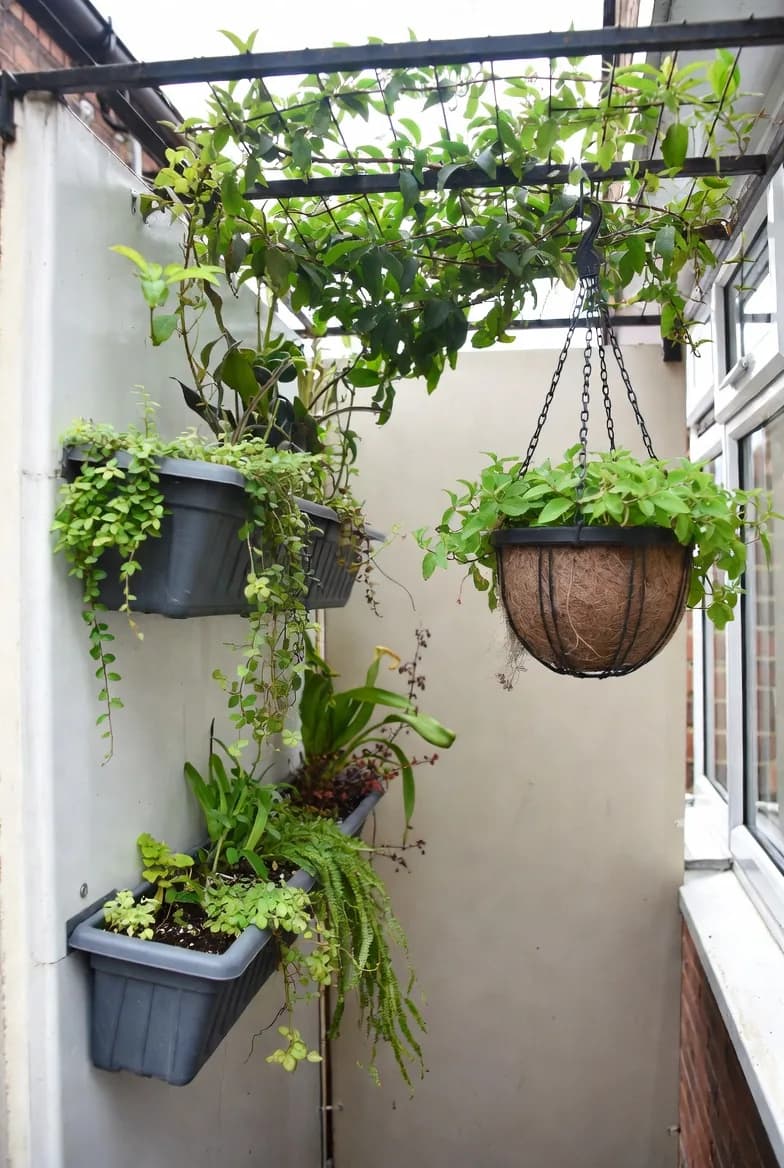
Vertical and hanging planters using the walls and overhead space of a narrow balcony
Keep it wild. Keep it safe.

Let wildlife arrive in its own time.

Use responsibly sourced plants and materials, avoid moving animals from the wild, and always build in safe access and escape routes. The best habitat is one that can settle, change and become part of the wider garden.

Written and reviewed by

Natasha Card

BSc Environmental Science

Mini Wild Garden turns wildlife science and trusted UK conservation guidance into practical changes that work in ordinary gardens, balconies and small outdoor spaces.

Read the Mini Wild Garden approach
Was this guide helpful?